
Migration Services
We help you move Microsoft environments, applications, and data. We plan around the systems that depend on them, your deadline, and what needs to work at the destination.
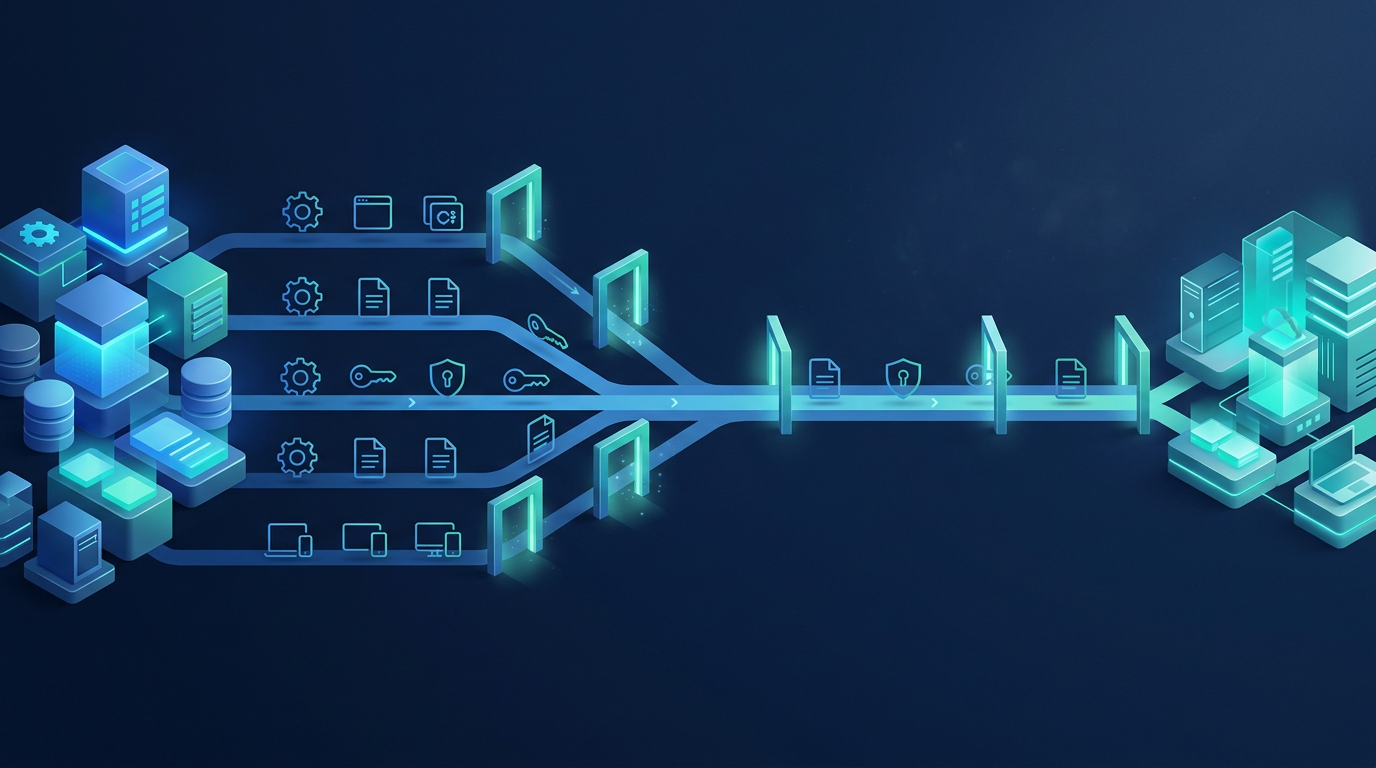
The transitions we help you make
Microsoft 365
We move Microsoft 365 workloads and content between tenants, accounting for the identities, permissions, and applications connected to them.
Identity and access
We work through how people will sign in and access the destination, including Entra ID, Active Directory, permissions, and devices.
Applications and data
We map data to the destination, check what each application needs, and test the connections affected by the move.
Organizational change
For mergers, acquisitions, or separations, we plan which systems and data move, when they move, and who takes responsibility afterward.
A path from assessment to handover
1. Assess
Inventory workloads, data, owners, dependencies, constraints, and risks.
2. Design
Agree the target, mappings, coexistence, tools, and migration waves.
3. Prove
Pilot representative workloads and resolve exceptions.
4. Transition
Coordinate migration, cutover decisions, communications, and recovery responsibilities.
5. Validate and hand over
Reconcile results, capture acceptance evidence, and transfer operating knowledge.
Choosing migration tools
We choose tools to suit the source, destination, and data involved. We check how they report errors and how we will verify what has moved.
Deliverables your team can use
The migration plan records what is moving, the dependencies, and the cutover steps. We also document the destination design, validation results, and information your team needs for handover.
Business owners define the records, relationships, access, and application behavior to preserve. Agree acceptance checks and support responsibilities before cutover. When an application needs redesign, Development connects modernization with the wider transition.
Questions to discuss early
Where do we begin?
Share the source and destination environments, business milestone, affected workloads, and known constraints. Discovery establishes the scope.
Can old and new environments coexist?
Coexistence can support a phased transition when workloads and the identity model allow it. Its limitations and ownership belong in the design.
What determines cost and timing?
Volume, data quality, dependencies, tool licensing, validation requirements, and permitted transition windows shape the estimate.
How are applications handled?
Assess whether an application can move, needs replatforming, or should be rebuilt. Migration work and Development can share a coordinated transition plan.
Bring the right expertise together
Enterprise teams
Engage SWFT around a complete transition or a defined technical workstream.
Microsoft partners
Bring SWFT into an engagement for migration architecture, implementation, or validation support.
Tell us what is moving, where it needs to go, and any deadline or restriction you already know about.
Discuss your project